Frankenstorm

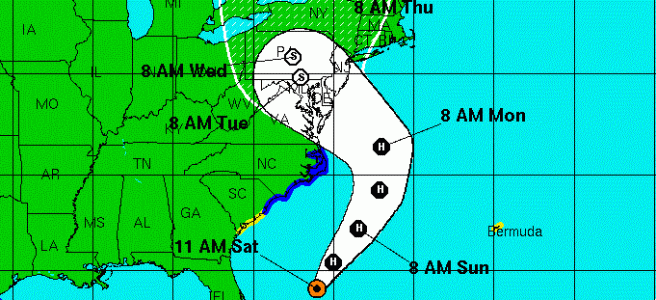
Here in the US we usually have a “storm of the century” every few years, but this coming week we’re having a “storm of a lifetime”.  Dubbed by the media as “Frankenstorm”, Hurricane Sandy is projected to hit the east coast somewhere between the North Carolina/Virginia border and New York City sometime on Monday.  A few hours ago the models were putting the path right over my QTH, and now they’re projecting the path south of the Radio Artisan lab.  Either way we’re going to get a bunch of rain, probably 6 to 10 inches.  Earlier in the week it was looking like the hurricane would collide with a high pressure system from Canada that would turn it into a monster snowstorm, essentially a “noreaster”  snow hurricane!

So today I’m busy getting gas for the generator, stockpiling water, putting away anything that isn’t tied down, and installing some temporary guy lines on my modest 40 foot tower.  In addition to the generator, I have 150 Ah of solar-charged battery to run rigs.  Since we live in the country we’re pretty well stocked up on food, ammo, and liquor should things get ugly.  The only bad thing is that I work at home, so there’s no excuse to not get to work next week.

Progress

Recently it’s been quiet here on Radio Artisan and I’ve been somewhat absent on AmateurRadio.com.  The usual excuses apply, with work consuming most of my intellectual energy and time.  It’s unfortunate we have to work so hard to live and have some fun.  In this culture we seem to be on an endless treadmill that goes faster and faster, but goes nowhere.  But needless to say I’m still alive and have been actually doing some amateur radio stuff these days.

Daily I receive correspondence about my CW Keyer and Rotator Controller, most of it coming from Europe and Australia.  Originally with the Rotator Controller I just wanted to interface my Yaesu rotator to the computer, but it’s gone beyond the original scope with notes from folks interfacing homebrew rotators and some amateurs with really cool ideas.  I continue to write bug fixes and minor feature updates for the CW Keyer, which now has two parties offering hardware kits.

The main project garnering the most attention right now is the Arduino Antenna Tuner.  It’s going slower than anticipated, but I’m pleased to say I’ve been making some progress with a good portion of the tuning network built, the I2C interface hardware working, and the frequency counter prescaler built on the hardware prototype.  I’m currently working on an SWR bridge and I’m having some issues.  I’ve built a Bruene bridge and a Tandem Match bridge, and both have rather mediocre directivity, in the neighborhood of 12 to 14 dB.

Both of my SWR bridge prototypes are “good enough” to use for software coding and testing, however I want the final product to be better.  Any feedback from anyone with hands-on experience building SWR bridges would be appreciated.  Once I get the hardware prototype to a reasonable level, I can dive into the coding.  Some of this work was completed earlier this year as I wrote some SWR reading and calculation subroutines and some LCD interface code.  I’m really giddy to get coding. Although I really like building stuff I guess I’m more of a software guy than hardware.  I find algorithms, protocols, networking, and interfacing exciting.

I continue to enjoy working with folks, helping them get code working and talk about ideas.  It’s neat to be able to email someone halfway around the world a code snippet and have them load it up on their hardware, use it, and have fun with it.  Although the Internet has made the world seem smaller, and amateur radio is no longer the only way to talk to folks in far off lands, amateur radio adds another dimension to the Internet and vice versa giving us more opportunity to help each other and promote international goodwill.

Show and Tell

This week I conducted a presentation on amateur radio for a neighborhood historical group.  I was a bit nervous going into this as it was my first attempt at explaining our hobby in a presentation to the general public.  For me it’s a challenge to capture the full essence of amateur radio in 45 minutes and not use too much lingo or go off on tangents.  However, the presentation seemed to be pretty well received and I even got some laughs from the audience when talking about things like big antennas in backyards, interference, drinking beer at Field Day, and the 6 meter “magic band.”

This isn’t your grandfather’s amateur radio….

Explaining how radio waves bounce off the ionosphere

After the presentation we had wine, cheese, and various homemade dips and deserts.  I fielded a lot of questions and several folks told me stories about relatives who were shortwave listeners, hams, or radiomen in the war.  A good time was had by all, as they say….

New Amateur Radio Portal

Yesterday while Googling someone’s callsign I stumbled upon QRZCQ.com, a new amateur radio portal. You’re probably saying right now “Great, yet another website trying to be like the ‘Zed.”  Indeed, it is trying to be yet another QRZ.com, but unlike others who have tried, this one appears to have gotten it right.

At first glance, the site is very visually appealing.  Unlike other sites it looks like it was designed in this century, with nice colors and fonts, everything ties together visually, and there appears to be use of “Web 2.0” technology.  QRZCQ features a callsign database, with user editable profiles.  There’s a DX cluster area that is very well designed with filtering capability.  The Forums page is a bit basic, but I like the threaded conversations.  It doesn’t appear that forums are the center of attention on this site like it is on other portals, another good move in my opinion.  QRZCQ’s Swapmeet area doesn’t have a lot of equipment for sale yet, but I like the layout of the ads.  Hopefully this design will scale well as the volume increases.

The site has other features one would expect such as chat, videos, a resources area, and a “Stream” page that shows user activity on the site.  The site is free, however they will be offering premium subscriptions, they just lack a payment system at this point.  Premium subscribers will have more DX cluster filtering functionality, be able to author articles and news stories, create and manage chatrooms, and have additional functionality in other areas.  There are currently no banner ads on the site.


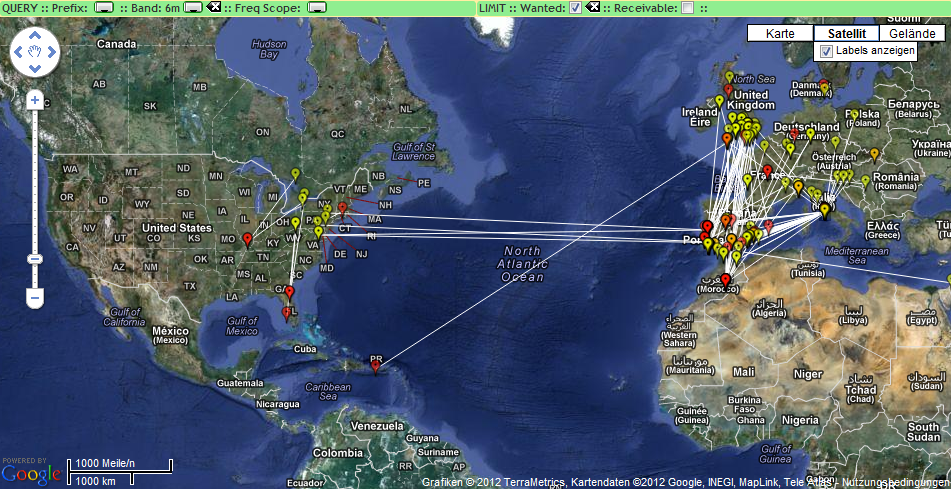
One feature I really like is the DX cluster map.  It’s like the venerable VHFDX.info cluster maps, which have been having a lot of service problems recently and is down as I type this.  QRZCQ’s cluster map is based on Google maps, so you have your choice of maps and the familiar Google maps controls and navigation.  I may start using this more regularly if it refreshes well and is reliable.

QRZCQ.com launched earlier in the year (general free memberships opened in April), and the site seems to have a decent number of users as it doesn’t have that struggling new portal site feel.  The audience is very international as the Users Online feature shows.  All in all, this looks like a wonderful resource for amateur radio that is well thought out and will be useful in day to day operation.  I plan to use it extensively and I would recommend all radio artisans to check it out.

Arduinos in Space and On The Air

Recently the Arduino has been making its way into the skies.  ArduSat is a project to build and launch an Arduino-powered satellite into space.  Here’s a video describing the project:

A little closer to Earth, Michael Doornbos, N4LNX and founder of Evadot, is working on an Arduino-based board for using in balloon payloads.  The unit is called FireFly and features wireless capabilities, a data acquisition and storage subsystem, and is solar power ready.  It’s intended to pack a lot of functionality in one easy-to-use unit and save time and effort for those building payload computers for high altitude balloon experiments.

Here’s a short video showing reception of data bursts from a FireFly on a Yaesu FT-857:

This project is really timely considering the recent increase in interest in balloon experiments in amateur radio.

Why We Like Field Day

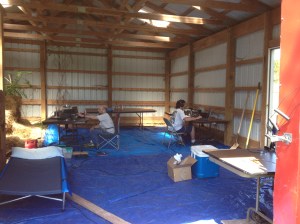
This past weekend I spent Field Day with two long time friends.  It wasn’t the biggest, best, most-attended, highest-scoring Field Day I’ve participated in, but it was good to do this annual ritual.  I’ve always loved Field Day, and it’s perhaps my favorite event.  I think my initial attraction to it was combining camping and the outdoors with my love of radio.  Today I see it more as something that brings everyone in our diverse hobby together.  Field Day captures nearly all of the components or

facets of our hobby into one event: casual operating, contesting, learning, construction, emergency operations, construction, socializing, and of course, eating good food.  No matter what each of us does in amateur radio or what modes we like, there is a place for everyone at Field Day.

Setting up for Field Day is stressful, no doubt about it.  For those of us involved in organizing these events at one time or another, you question whether it’s worth it.  Then there’s the weather, often rainy, sweltering, or a combination of both.  There’s never enough time to setup and you never seem to have enough hands to help out.  But when everything gets underway, it’s all worth it.

Field Day recharges me for another year of operating.  Now that I’m back in the home QTH and off today, I’m thinking about the next Field Day… what can we do better and easier, and make more fun.

Is There An App for That?

We’re hearing talk these days of the “Post-PC Era” when devices like the iPad, tablet PCs, and smartphones along with cloud-based applications will ultimately replace the PC.  I don’t totally buy into this as these devices don’t have the form factor or horsepower to replace the PC, at least in business environments.  I do think that the venerable tower PC, outside of gamer circles, will die.  It used to be standard to select a tower PC based on the number of expansion slots and bays, and it was once common to upgrade processors for more horsepower.  Those days are gone and more people are using one-size-fits-all laptops or appliance-like desktop machines, and when they’re three or four years old they’re tossed out for the latest model that can run Microsoft’s latest OS and office suite.

For over the last 15 years, when you bought a PC you by default got Microsoft’s OS, Windows and usually Microsoft Office or Works.  This symbiotic relationship has been dubbed “Wintel”, symbolizing the combination of Windows and Intel-based hardware.  Of course Linux has made inroads over the years but despite what Linux advocates say, it’s never passed the philosophical litmus test, being able to be run by your grandmother.  It continues to be the darling of techies’ desktops and runs the Internet behind the scenes.

With applications heading to the cloud and developers needing to support multiple devices running different operating systems, applications are more and more running in virtual machines such as Java rather than on the bare OS.  HTML 5 is supposedly going to revolutionize web applications, bringing functionality that was previously limited to Flash applications into HTML, an open language that is universally supported.

Amateur radio in my opinion has always had an odd relationship with software, that somewhat has its roots in the mindset of 1980’s DOS PC computing.  It wasn’t until the early 2000s that some of our most widely used logging and contest programs offered Windows replacements of their DOS ancestors.  Our free software authors never quite embraced open source, opting more for free-as-in-beer / freeware.  Nearly all notable amateur software is Windows/PC based.  There is some software for Mac and Linux, but it’s more a novelty.  I’ve found Linux ham radio software, especially logging programs, to often be someone’s experiment with making a database frontend rather than a concerted effort to build a major software application, like Ham Radio Deluxe or DXLab.  I know this will raise the angst of Linux users, but if you want to run amateur radio applications with full functionality, it’s tough to not use a PC running Windows.  I’ve tried about five times to switch to Linux in the shack and gave up.  I would love to buy a Mac, but I would still need a PC to run my amateur apps.

There is a paradigm shift in software coming.  The PC/Windows world is coming unseated.  It’s not going away, but it’s not going to be the default “no-brainer” choice that it used to be.  While we have many fine commercial and free software offerings, we’ve failed miserably in making cross-platform applications.  Even our networks like Winlink, D-STAR, IRLP, and APRS are vertical “silo” applications, some tied to specific OSs or hardware, or just outright ignore open standards.

Enter the Raspberry Pi, a very inexpensive single-board computer that is for supporting economical computing in third world countries.  It’s quickly turning into the latest geek fad.  Never has such a small board had such computing power at such a low price, and despite being a full-fledged computer it may very well displace the popular Arduino on many experimenter’s benches.  It should be a very hot commodity in amateur radio as it’s cheap and open, and ideal for hardware hackers like us.  Here’s the kicker.  It has an ARM processor and it can’t run Windows.  The best programs we have can’t run on this device.

I don’t see the PC world ending very soon, but I have to question at what point we’re going to start sacrificing some opportunities due to our lack of cross-platform software and systems.  In the past when considering software compatibility, one used to ask whether you ran a PC or Mac.  Today you hear questions like, “Can I get that in my app store?”, or “Does it run on Android?”
Cool Field Day Visit

A few days ago I received this announcement from the ARRL Eastern PA Section Manager, Bob Famiglio, K3RF:

“As EPA Section Manager, I have received a number of invitations to visit the field day sites of ARRL affiliated clubs.  As an ARES District Emergency Coordinator for many years, I enjoyed visiting field day sites in my five county district from time to time. The challenge now, however, is how do I visit sites throughout the EPA section during the actual operations?  I would have to sprout wings.  But wait, maybe I can.

As some of you know I hold an FAA private pilot certificate. I am
fortunate to be acquainted with another ham pilot, Jim Goldman, W3JG.
Jim is not only an experienced pilot, but also owns his own late-model
Cessna 182 aircraft.  What’s more, Jim’s aircraft was professionally
fitted with an extra antenna for 2 m and 70 cm. Having had the pleasure
of flying with Jim in the past, I suggested that we plan a field day
trip as a salute to as many ARRL club sites as we could comfortably
visit from the air. Jim likes the idea so we are on. Naturally,
weather, flight restrictions and safety considerations may limit what
we can do in certain instances. However, our tentative plan is to fly
over as many field day sites as practical, perhaps dip a wing in salute
and provide a contact as aeronautical mobile as well.”

Jim goes on to talk about frequencies, logistics, and how to request a fly-by visit.  I think this is a wonderful idea.  It’s great to see such creative thinking in amateur radio and ARRL leadership.

What’s Going On?

For the past several weeks I’ve been using my keyboard tapping, when not working on IT projects, mainly for coding, so my blogging has suffered a bit.  Here’s what I’ve been up to in the Radio Artisan laboratory recently:

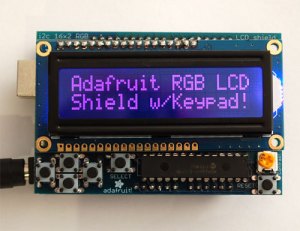
My Arduino CW Keyer code now supports six separate transmitter keying and PTT outputs and it’s no longer necessary to use PTT lines for transmitter keying line multiplexing.  K1EL Winkey emulation mode has been enhanced to support Winkey 2 commands and has been tested successfully for SO2R operation.  I’m currently working on LCD display code that will use the Adafruit RGB LCD Shield.  This unit is really sharp looking and uses only two I/O pins for interfacing using the I2C protocol.  I’m planning to use I2C a lot more in all of my projects in the future.

I have added to my Arduino Rotator Controller software brake control and “slow start” capability, and rotators with any starting azimuth and rotations of up to 719 degrees can be configured.  If you’re not familiar with this project, you can interface nearly any rotator to any logging or control program.  Experimental code for using the HMC5883L digital compass and ADXL345 accelerometer is included if you want to homebrew your own rotator and not use pots for reading azimuth and elevation.  On the roadmap is support for the LSM303DLHC combination digital compass and accelerometer and the Adafruit RGB LCD Shield.

I’m currently working on an Arduino controlled balanced antenna tuner.  I won’t go into all of the gory details here, but needless to say it’s going to be commercial grade, very configurable, and have QRP and QRO versions.  No stepper motors or expensive roller inductors.  This is going to be fun.

If you subscribe to CQ magazine, be sure to check out my article in the June 2012 issue entitled “Summit Expeditions – Outdoor Radio Adventure Close to Home“.  I talk about operating from Summits On The Air (SOTA) locations and give some thoughts on equipment choices and the benefits of outdoor operating.  If anyone wants to invite me to a big time DXpedition in a cold, high latitude QTH, please send me an email :-)

So that’s what’s been going on here.  Keep your software updated, your beverages cold, and your rig warm.  73